Sunday, 15 September 2013

Creating a Community Garden 10

In a series of posts I have outlined the process by which Nightingale Community Garden in Dinas Powys was created (links below). In June, I described how the garden was flourishing during its first summer. Among the verdant greenery, it was hard to believe that gardening had only started a couple of months previously. Some of the crops were entered in this year’s Dinas Powys Village Show (31 August); Giles Metcalf’s beetroot, for instance, won First Prize.


On Saturday 14 September, the official opening of the Nightingale Community Garden was held. Cllr. Keith Hatton and Elizabeth Millard, of the Dinas Powys Residents’ Group, welcomed everyone, outlined the history of the garden, introduced the special guests, and thanked those who had made important contributions along the way.

Keith had the original idea of doing something with the derelict piece of land, on the footpath that connects Sir Ivor Place and Nightingale Place, which was becoming a focus for anti-social behaviour in the area. With Elizabeth, they put together the first plan for turning it into a Community Garden. At an early stage they gained the support of Mike Ingram, one of the special guests at the event, who is the Operational Manager of Public Housing Services at the Vale of Glamorgan Council. Mike facilitated the smooth transition of the site, from unwanted public housing land to Community Garden.

The Finance Minister of the Welsh Assembly Government Jane Hutt AM placed the garden within the larger context of The Rural Development Plan, which is a joint Welsh Government and European Union strategy. In her short speech, she stressed the importance of finance from the European Agricultural Fund for Rural Development, which along with Welsh Government funding enables projects such as this to happen. Jane also stressed the importance of supporting community-led initiatives.

The Welsh Government funds community projects through Councils. Cllr. Liz Burnett, another of the special guests at the event, is Vale of Glamorgan Cabinet Member for Regeneration, Innovation, Planning and Transportation. The money that comes to the Council for rural regeneration is in her portfolio. The Vale of Glamorgan Council funds its own rural development initiative: Creative Rural Communities.


Rob McGhee of the Community Foodie section of Creative Rural Communities, established to help communities grow their own food, has been involved with the Nightingale Community Garden project from a very early stage. He has been key in obtaining funding and helping to manage the project, including overseeing the contractors who have worked to transform the site. He praised the enthusiasm of the local communities he works with, both in Dinas Powys and in other places were similar projects have been successful such as Treoes. Rob is the one talking in the picture above, with Mike Ingram next to him.


BBC Wales’ weatherman Derek Brockway (above, with Keith) certainly bought the sun with him, which shone throughout proceedings. With a cheery “hello and shw’mae” he gave us an up-to-date weather forecast. Unfortunately, this involved windy autumn weather just around the corner. He noted how the warmest and driest summer for seven years had helped the garden be so productive in its first year. Below is a picture of Derek cutting the ribbon, with Keith looking on. Derek took time out from filming his current series of 'Weatherman Walking' for BBC Wales to open the Community Garden. You can find details on the BBC website, where you can also print out Weatherman Walking maps that enable you to follow in Derek's footsteps. He was right about the weather today (Sunday); though I am in the warm writing this, and he is walking and filmed up in the bleak Brecon Beacons!


Here’s a photo of Cllr. Keith Hatton, Derek Brockway, Elizabeth Millard and Jane Hutt AM.


During the speeches Keith and Elizabeth thanked several people whose energy and enthusiasm have contributed enormously to the garden’s success. We owe a big debt of gratitude to Stuart Hockley for, among other things, orchestrating the laying out of the plots and for erecting two large greenhouses and a shed in the garden. Merry Metcalf was thanked for organizing all the paperwork during the crucial stage when the plots were being allocated, and Lynne Squires was thanking for carrying on in this role.


Angela Peterken is the lead gardener of a Family Growing Group within the garden. This arose from her work as a Learning Support Assistant at Dinas Powys Infants School, following enquiries by parents keen to start growing vegetables with their children. Five families have been working alongside each other on the largest plot in the garden, including families with no previous experience of growing their own food. 24 different types of vegetables have been grown on their plot, including these pumpkins (a credible Third Prize in the Village Show), which are being lined up for Halloween.


An impressive array of food was on offer, all contributed by plot-holders, including a cake made by Angela. David Southall, who was thanked by Keith during the speeches for donating the large greenhouse to the garden, is seen here cutting the cake, with Mike Ingram and Elizabeth Millard looking on.


Below is a picture of Robin Harrison at the plant stall, selling seeds and seedlings. Robin is a fount of gardening knowledge and he teaches an Organic Gardening course at Murchfield Community Centre on Wednesday mornings (10am-12 noon) during term-time; part of Penarth Community Learning Centre’s adult education programme.


Below are some photos taken during July and August, since my last dispatch on the Community Garden, including one of the small wooden seats Giles made from felled timber and one of my own plot. Like many plot-holders, I had good crops of runner beans, potatoes and courgettes; along with rhubarb, peas and chard. As Elizabeth said, at the conclusion of the speeches, this is the fulfilment of a dream to turn an ugly derelict area into an attractive productive garden, which has really bought together the community in this part of Dinas Powys.


Previous posts on creating a Community Garden in Dinas Powys:

June 2013
http://sfnottingham.blogspot.co.uk/2013/06/creating-community-garden-9.html

April 2013
http://sfnottingham.blogspot.co.uk/2013/04/creating-community-garden-8.html

March 2013
http://sfnottingham.blogspot.co.uk/2013/03/creating-community-garden-7.html

Feb 2013
http://sfnottingham.blogspot.co.uk/2013/02/creating-community-garden-6.html

Jan 2013
http://sfnottingham.blogspot.co.uk/2013/01/creating-community-garden-5.html

Oct 2012
http://sfnottingham.blogspot.co.uk/2012/10/creating-community-garden-4.html

Aug 2012
http://sfnottingham.blogspot.co.uk/2012/08/creating-community-garden-3.html

Feb 2012
http://sfnottingham.blogspot.co.uk/2012/02/creating-community-garden-2.html

Jan 2012
http://sfnottingham.blogspot.com/2012/01/creating-community-garden.html

Thursday, 12 September 2013

YAKITORI#1, Cardiff

Amidst all the chain restaurants in Mermaid Quay, down in Cardiff Bay, it is good to see a local independent starting up. Last month, in a unit underneath The Glee Club, Yakatori#1 started serving modern Japanese cuisine - with the focus on sushi, grills and noodles. This is Japanese food that reflects the owners’ travels around the world seeing how it has evolved in contact with other cultures, such as California.


We were fortunate enough this week to be invited along to Yakatori#1, as guests of owners Meng and Cheryl Yap. Meng founded Ethnic Cuisine in Swansea in 1994; the company grew to employ around 400 people and supplied ready-meals for J. Sainbury’s. He sold that business five years ago, and is now embarking on this restaurant venture.

The Malaysian-born couple have assembled a highly-skilled team of chefs, who can be seen in the open kitchen preparing beautiful-looking food. Meng explains that, just as he told his former workers to always imagine Sainsbury’s looking over their shoulders, he likes his chefs to be aware of the customers whose food they are preparing.


The range of sushi - maki rolls, hosomaki and nigri sushi – look great and, as Meng says, are designed to produce taste sensations. Therefore, the amount of rice is kept relatively small, to allow the other ingredients to shine. Bowls of avocados are prominently displayed in the kitchen, and thin slivers of avocado contribute a distinctive cool and creamy dimension to Yakitori#1’s maki rolls. Salmon, prawns, crab, tuna, and chicken are among the other favoured ingredients. Rainbow maki is a colourful flavour sensation, while avocado and mango maki provided an unexpectedly sweet and delicious taste experience. 


‘Yakitori’ means ‘grilled chicken on a skewer’. Yakatori, a term that can be also used to describe skewered and grilled food generally, is served in small informal restaurants and from food stalls in Japan.  The chicken yakitori here is therefore something of a signature dish, and consists of succulent flattened chicken breast pieces, coated with teriyaki sauce, and spring onion on small wooden skewers. Lightly battered king prawns and gyozu (a type of dumpling) with a sweet chilli sauce were other highlights.


The freshness of the ingredients is very important to Meng and Cheryl (and there’s certainly no MSG). The fish is sourced from Brixham-based Channel Fisheries, while vegetable ingredients are obtained locally. The nori (seaweed) is imported from Japan (where it is farmed, toasted and packaged as rolled sheets on a large scale) and there’s a choice of Japanese beers.


Yakatori#1 is family-friendly, not something you usually associate with Japanese restaurants in the UK. The children’s menu has ‘mini mains’ of ramen, wok-fried noodle and rice dishes, and a mild curry (and ice cream, of course). The menu also offers lunch and dinner specials, bento lunches and take-away options.

The name suggests that there could be at least a Yakatori#2 to come. On the evidence of the food we tasted, that would not be too surprising.

Yakatori#1, Unit 10 Mermaid Quay, Cardiff Bay, Cardiff CF10 5BZ (Tel: 2049 5050)http://www.yakitori1.co.uk

All food kindly provided free by Yakatori#1
Photos in this post courtesy of the restaurant.

Tuesday, 20 August 2013

Green Man Festival 2013

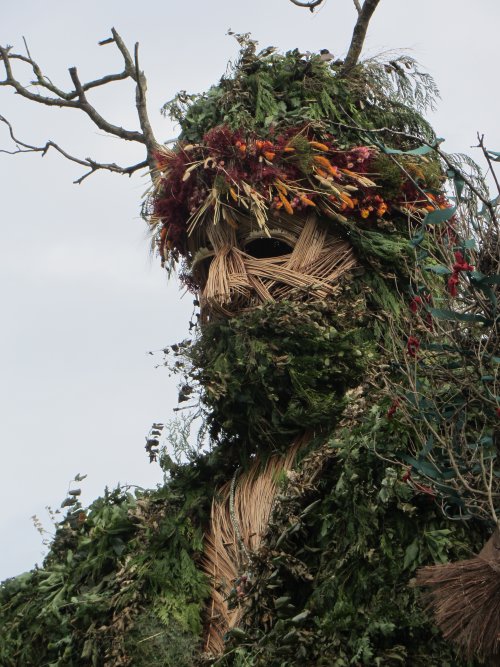
This year was one of the best-ever Green Man Festivals. Held in a beautiful location every August near Crickhowell in the Brecon Beacons, it’s about far more than just the music (though the music is great), with the good food being one of the attractions.

This year, four new stalls joined the regulars. One of the newcomers was London-based Anna Mae’s Southern Street Food. Founded in 2011, they offered their signature mac n cheese.


A new discovery for us was French and Grace, who are based in Brixton Village Market. I really enjoyed my F&G chargrilled halloumi Lebanese flatbread wrap, which included fresh mint leaves, a pickled chilli, ‘slaw and tahini dressing. The company is run by Rosie French and Ellie Grace, and their first cookbook ‘Kitchen and Co’ was published last year. I had a flip-through at the stall and it looked good.

We were camped near another newcomer, The Hurley Burley. This campsite Theatre Café proved very useful for morning teas and coffees. Alongside a range of breakfasts and appealing vegetarian food options they had live music, with the staff taking time out to do a few song-and-dance and circus routines. It’s one to watch out for in future years. Other breakfast (and late night hot drinks) needs were met by Cwmdu Community Stall, as they are every year.

The first essential artist at Green Man 2013 was Patti Smith on Thursday night. She ate at the Rotisserie Chicken (Walled Garden) before her set and pronounced it very good from the stage. What higher recommendation could this Green Man regular want?


During their set, before singing their song ‘Kingfisher Pies’, the singer of Midlake said he was making for the Pieminister van afterwards. I don’t have the info on what was ordered. However, this year, my festival Pieminister pie was the Matador (beef, chorizo, olives).

I enjoyed a coconut chicken curry from Roots Caribbean catering, while listening to some soul in Chai Wallahs (the stage with global, jazz and urban music). The curry was very good (dark rum, spring onions etc). Other options included jerk chicken, braised mutton and Shropshire beef, served with sides of rice, plantain, dumplings or coleslaw.

A vegetarian falafel hit the spot one lunchtime - falafels deep-fried in filo pastry served with lemon, hummus and salad - from the Café Moor, who specialize in North African and Arabic Souk Food. We didn't get around to the Goan Fish Curry outlet this year, so that will be high on the list next time!


On the last night, having set up the youngest (a vegetarian) with a vegetable chow mein from the Oriental food stall, I found room for a vension burger (with onions) from the Welsh Venison Centre. I also helped the kids finish a fine vegetarian pizza from Green Pepper Red Tomato in the Mountain’s Foot area; some tasty Mexican food from Bristol-based Poco Loco; and some tomato and basil pasta from the Pizza and Pasta outlet in Chai Wallahs.


The family vote for best chips at the festival went to The Hippy Chippy in the Walled Garden ('Frozen Chips? No Thanks').

The ice cream of choice was Shepherds, who are based in Hay-on-Wye (est. 1978). The youngest always goes for Chocolate, but I decided to explore the more adventurous end of the menu with a Mango Chilli ice cream. This was an enjoyable, albeit one-off, experience: creamy mango with a delayed chilli kick. The two Coffee and Cake stalls (Walled Garden and Courtyard) kept us in coffee and doughnuts.

I mainly drank the excellent Growler, the Wye Valley Brewery ale brewed especially for the Green Man Festival. There were 100 artisan ciders and beers, largely from Welsh breweries in the festivals beer festival tent. The queues at this bar were the largest, with so many barrels for the staff to negotiate and people asking for samples before buying the unusual perrys; so although I would have liked to work through the list, I tended to seek out the Growler in the quieter bars.


The best meal I had at Green Man 2013 was [drumroll] a Seafood Paella from Jamon Jamon. This Green Man regular on the hill looking down on the Mountain Stage consistently delivers.


Not surprisingly, I managed to put on weight during Green Man 2013!

My favourite music acts included Stornoway, Patti Smith, Lau, Midlake, Band of Horses, Rozi Plain, Johnny Flynn, Kings of Convenience, Jon Hopkins and British Sea Power.


Previously:

Green Man 2012
http://sfnottingham.blogspot.co.uk/2012/08/festival-food-green-man-2012.html

Green Man 2011


Wednesday, 17 July 2013

Caroline Street, Cardiff

In the few hundred yards of pedestrianized Caroline Street / Stryd Caroline there are over a dozen food outlets, nearly all doing take-away. A survey conducted by Wales Online in 2011 asked what Caroline Street is really called. The result: Chippy Lane 47%; Chippy Alley 19%; Caroline Street 27%. The fish-and-chip and kebab houses open late to cater for the post-pub and nightclub crowds. Some open so late that there’s an overlap between clubbers and those seeking an early breakfast!

Caroline Street is undergoing change due to being sandwiched between the Café Quarter in Mill Lane and the Old Brewery Quarter. In particular, Caroline Street was redeveloped when the Old Brewery Quarter was established. Nevertheless, there are still plenty of long-established and no-nonsense chippies and kebab houses. Cheesy chips, jumbo sausages and chicken off-the-bone curries are among the favourites here.

Previously, I left you at The Corner House at the end of Mill Lane. We will be walking down the left (south) side of Caroline Street to St Mary Street, then turning around and walking along the other (north) side. Next time we’ll go into the Old Brewery Quarter from the Caroline Street entrance.


The Corner House
25 Caroline Street CF10 1FF (2022 8628)
The Corner House Bar & Dining Rooms opened in December 2011. It replaced The Kings Cross, a drinking pub and focus for the local gay community. There has been a pub on this site for 137 years. The Corner House is the first of Mitchell and Butler’s new Mayberry gastropubs. It covers most bases: breakfast, lunch, afternoon deals, and evening meals. Downstairs mainly operates as a bar, with dining upstairs. Pub classics with a bit of a twist to some pretty fancy cooking served, with plenty of choice on the menu. Last time we ate here, we enjoyed the fishcakes and the lamb rump steak. The Corner House has one of those annoying computer-crashing websites.

Griller
29 Caroline Street CF10 1FF (2022 4811)
Smartened up since the Food Blog last chronicled Caroline Street, Griller is a take-away specializing in fried chicken; serving peri-peri chicken, chicken nuggets, burgers, lamb kebab and wraps (rolos). For the health-conscious, there’s “fried-style chicken without frying”. This is the only Griller in Wales (around 38 in total across the UK). Like a number of outlets along Caroline Street, it’s Halal. It made the news in 2011 for being one of the first takeaways in Cardiff to have bouncers on the door for late-night Thu-Sat openings, by order of a district judge. Staff thought the ruling over-the-top.


PiPi’s
30-32 Caroline Street CF10 1FF (2132 8148)
PiPi’s Greek Coffee Shop, Patisserie and Restaurant opened in this location in 2009, after moving from a smaller location in Church Street. The upstairs restaurant closed last year, however, and is now an Indian restaurant. The patisserie and coffee shop opens in the mornings and through the day, with croissants, spanakopita (filo pastry with spinach and cheese filling) and other pastry delicacies. The eating-in menu features Meze, Taramosalata, Calamari, Soutzoukakia (meat balls), keftedes, Stifado, Moussaka, Greek salad, and other authentic Greek dishes. Desserts include Baklava, Kataifi and Greek yoghurt with honey and nuts. PiPi’s also get out and about. They had a stall at the recent Cardiff International Food & Drink Festival, where I sampled their fresh honey-drenched baklava and kataifi (the ‘shredded wheat’ one): like eating nectar in the blazing Cardiff Bay sunshine.

Spice Berry
30-32 (upstairs) Caroline Street CF10 1FF (2009 9199)
Opened in February 2013, in what was previously Pipi’s upstairs Greek restaurant. Spice Berry (”Savourix Indian Dining”) specialises in the cuisine of Southern Indian, with authentic dishes from Kerala and Tamil Nadu, and in particular the Malabar coastal region. Seafood options include crab, scallops and a shellfish feast; fish dishes include sea bass wrapped in banana leaves and tandoori salmon. Kerala curry, slow-cooked lamb shanks, duck milagu pirattal and Malabar biriyaani also feature. The owner is Sheikh Renoj Mohamed and head chef is Sundara Moorty Krisshnasamy, whose signature dishes include Navadhamiya Patties. Influenced by the success of the nouvelle Indian cuisine found in Purple Poppadom and Mint and Mustard in Cardiff. Highly rated (#4 today) on TripAdvisor. Spice Berry also operates a catering service.

After Colin’s Books (you won’t find any Harry Potter), there is a weed-infested gap behind the hoardings on this side of the street. This plot (34-35 Caroline Street) used to be Bloomers nightclub, which was petrol-bombed and burnt down many years ago; the site has never been redeveloped.

Morgan’s Fish Bar & Kebab House
36 Caroline Street CF10 1FF
Take-away: fish-and-chips and kebabs. You can also order online. Morgan’s is one of the establishments that leapt from an original zero to a perfect 5, if you are in any doubt about the value of the compulsory ‘scores on the door ’ Food Hygiene Rating system in Wales.

Mamaris Kebabs and Pizza House
38 Caroline Street CF10 1FF (2023 0208)
This take-away, previously called Kebab Land and Pizza House, serves shish kebabs, pizzas and other fast food.


Dorothy’s Fish and Chip Bar
39-40 Caroline Street CF10 1FF (2064 5813)
Dorothy’s Fish Bar is probably the oldest establishment in Caroline Street - opening in 1953 - and is well-used to catering for the post-pub and nightclub queues. It proudly boasts that it was the first to bring chicken curry to Cardiff city centre around 40 years ago, and chicken-off-the-bone curry with chips is still a house speciality. Traditional fish and chips, fish cakes, chicken spit-roasted daily, scotch eggs and a range of fast-food. Several generations of Cardiff families will have dined here. Dorothy’s key-rings available as a souvenir.

Tony’s Fish & Chip Bar
41-42 Caroline Street CF10 1FF (2034 2078)
Tony’s has been served chips to Cardiff’s late-night crowd for decades, and it’s still one of the most popular late-night chippies in the city. A traditional takeaway fish and chip shop, but also serves jumbo sausages, kebabs and other Chippy Lane favourites.


The Red Onion
43-44 Caroline Street CF10 1FF (2033 1284)
The Red Onion Fish & Chip Shop was established in 1971. Fish and chips, chicken curry, and other take-away choices.

Kebab King
45 Caroline Street CF10 1FF (2033 1284)
A kebab and burger take-away.

The door to the former Charleston Brasserie is still marked: it used to occupy the upstairs of the corner unit (46 Caroline Street). We have now reached St Mary Street.

Turn around and walk back along the other (north) side of Caroline Street:

kitty flynn’s
51 St Mary Street CF10 1AD (2064 4952)
Irish pub on the corner of St Mary Street and Caroline Street, owned by local brewery Brains (just a couple of blocks away). Apparently the pub was named after a famous Cardiff landlady; a drinking rather than dining destination.

The next unit was occupied by Mamma’s (pizza), until it closed in 2012.

We are now passing the Caroline Street entrance to the Old Brewery Quarter, with Bella Italia on this side and Thai Edge and Spice Quarter on the other. We will be going under the archway here next time. Carry on along Caroline Street:

Rosario’s Steak House (19 Caroline Street) closed and is still an empty unit.

Capital Takeaway
21 Caroline Street CF10 1FG (2039 8600)
Take-away, mainly doing pizza, kebabs, burgers and fried chicken. I read somewhere that it was once referred to as “6 fingers” because someone who worked there had six fingers on one hand.

Lab 22
22 Caroline Street (upstairs) CF10 1FG (2039 9997)
Lab 22: The Molecular Cocktail Lounge is run by Matt Zain and Stephen Carwardine, and serves avant-garde cocktails in the spirit of Heston Blumenthal. This is bar as theatre. Jellied gin, oak-smoked coke and whiskey, solidified champagne on a spoon. Don't ask for Brains.

Greggs
22-23 Caroline Street CF10 1FG (2022 7896)
This is one of at least 15 Greggs bakery and sandwich shops in Cardiff. This one is the only major chain in Caroline Street and keeps regular opening hours, unlike its neighbours.


Wednesday, 3 July 2013

Mill Lane and Wyndham Arcade, Cardiff

The Food Blog was last on Mill Lane  / Lon Y Felin in September 2011, when we noted the changing nature of its eating establishments. In recent years, it has been out with the French bistro and traditional Italian, and in with South American cuisine and Hawaiian cocktails. This is Cardiff’s Café Quarter. It comes into its own during the summer, when the outside tables under the trees are bustling.
On the corner of St Mary Street and Mill Lane:

Peppermint Bar & Kitchen
63 St Mary Street CF10 1FE (2039 9199)
Peppermint opened in August 2011 (taking over from Zync in this corner location). It’s an independent party, drinks and food venue on two-floors (with another one in Swansea). The food menu offers a wide range of light dishes, and there’s a late-night bar. Outside seating on pedestrianized Mill Lane.
The Mocka Lounge
1-2 Mill Lane CF10 1FL (2022 1292)
The mocka lounge is a café and nightclub. It opened in 2009 and serves food, lunches and light bites until 7pm. Cocktails a speciality. Open until the early hours.
Sushi Bento
3 Mill Lane CF10 1FL
Opened in 2012 Sushi Bento is a restaurant and take-away offering bento-style Japanese street food. This location was formerly occupied by Flavour Eurasia.
Soda Lounge
4 Mill Lane CF10 1FE (2039 8380)
This large bar and nightclubbing party venue is part of the Le Monde complex, which also fronts onto St Mary Street. A ground floor lounge (comfy seats) and bars on several levels, including a roof terrace (and exclusive Attic bar). Some food served, especially for parties. The original Soda Bar operated on St Mary Street from 2002 to 2008.
Retro Lounge
7 Mill Lane CF10 1FL (2039 8380)
The Retro Lounge is the “home of the 90’s vibe”. A place to party and drink cocktails, rather than eat and, I can’t lie to you, it's also the “home of Stacey’s Hen Night”.
The next shop (Cardiff Bridal Centre) sells wedding dresses.
Las Iguanas
8 Mill Lane CF10 1FL (2022 8373)
This was the first Cardiff location for the Bristol-based chain (with another in Cardiff Bay). Las Iguanas’ Latin American cuisine offers something different and has become very popular in Cardiff. Menu features Mexican classics, popular Brazilian dishes, grilled sandwiches and salads. There are popular dishes from other Latin American countries and special nights featuring the cuisine of particular countries. Cocktails (seemingly obligatory on Mill Lane) and pitchers of Sangria are popular.
The next shop (Private) sells sex aids.
It looks a little sad and out of sorts today, but The Private Shop was here in pre-Internet times (when shops like this were the main outlet for porn) and therefore it pre-dates all the bars and restaurants around it. Private was here when the area opposite (now a Marriott Hotel) was an outdoor vegetable market, recalls Peter Finch in Real Cardiff who describes the contents of its shelves (p. 70), and nearby was “the infamous rock and blues Moon Club.”
Juboraj
10 Mill Lane CF10 1FL (2037 7668)
Juboraj Indian Restaurant in the Café Quarter is part of the local family-owned Juboraj group, serving high-end Indian and Bangladeshi cuisine. They have been in Cardiff for around 20 years, with establishments also in Rhiwbina and Lakeside, and most recently in the Big Windsor building in Cardiff Bay. The Mill Lane restaurant has undergone an extensive refurbishment recently, to bring it up to standard. An extensive menu of classic and authentic Indian cuisine.
Aura (“dedicated underground music venue”) opened in 2012 and is now shut. The adjacent The Ladybird Lounge nightclub opened in 2011 (upstairs 10 Mill Lane). The latter’s advert boasts: “as featuring in The Valleys.” You have been warned.
Kapu
11 Mill Lane CF10 1FF (2066 5500)
Kapu Exotic Cocktail Bar and Island Grill opened in June 2012, and as one of the year’s most radical refurbishments. The previous outlet, operated by same owners, was Gios Italian restaurant. The food menu in Kapu focuses on grilled steaks and chicken, ribs, burgers, fish and shrimps; with tofu skewers for vegetarians. Kapu is Hawaiian for forbidden; other Hawaiian phrases and pineapple chunks characterize the menu. Palm tree décor completes the Hawaiian theme; in case you missed it.
Opposite, just beyond Carluccio’s at the end of the Library Building:
Marriot Hotel
Mill Lane CF10 1EZ (2039 9944)
The Cardiff Marriot is a four-star hotel in a prime location, handy for the railway station and the restaurants of the Café Quarter. The main dining location is the Centrale brasserie. Chats downstairs has an outside terrace and is promoting sharing platters and sparkling wine for the Café Quarter crowds this summer.
The Library Building has three eateries on the ground floor. These are also listed as St David’s Centre restaurants (in the centre’s information), but here they will be considered as part of Mill Lane:
Carluccio’s
16 Mill Lane (3 Library Building) CF10 1FL (2023 2630)
Carluccio’s Caffe is a deli and café. This Italian food venture was started by celebrity chef Antonio Carluccio. It is the only Carluccio’s in Wales. Pasta is the big thing here (not pizza), with other features of the menu including the risotto of the day, fish dishes (e.g., fish soup, pan-fried sea bass) and meat dishes (e.g., slow-cooked beef stew, Milanese-style chicken, veal). Open for breakfast. I left with some olive bread and chocolate brownies last time I visited the shop. Events held here include pasta and risotto making classes, and wine tasting evenings.
Gourmet Burger Kitchen
15 Mill Lane (2 Library Building) CF10 1FL (2066 8379)
gbk was ahead of the game on the gourmet burger trend, but has now lost some of its usp as gourmet and posh burgers are everywhere. Interesting options include Persian lamb, Wild boar, Avocado bacon, and Blue cheese; though ordering the Bunless burger is probably an indication that you’re in the wrong place. The kids enjoyed it here more than I did, with the milkshakes proving popular. There is another gbk in Cardiff Bay.
Wagamama
14 Mill Lane (1 Library Building) CF10 1EX (2064 1564)
I like the refectory tables and ethos of Wagamama. The food does not seem as economical as it used to be back in the day, but the free green tea helps keep the bill down (and it’s just the thing). Large bowls of ramen noodles have always been the staple, but I’ve been exploring other areas of the menu. On my last visit I went for the Teriyaki chicken donburi: teriyaki-glazed chicken in a bowl on sticky rice, with shaving carrot, water cress, spring onions and sesame seeds on top; served with a fresh crunchy hot relish. Some of the dishes can be surprisingly spicy (in a good way). There is another Wagamama in Cardiff Bay. Take-away can be ordered. The Wagamama Lounge is touring Bestival festivals this summer.
On the corner is the entrance to the main Cardiff Library; head up to the fourth floor for the Food and Drink book section. Outside is Jean-Bernard Metais’s impressive sculpture Alliance, with its circle and spike elements. Peter Finch was responsible for the concrete poetry underneath: twelve historical ways of spelling Cardiff.
Back on the main stretch of Mill Lane, next to Kapu:
ASK Italian
28-32 Wyndham Arcade CF10 1FJ (2034 4665)
ASK Italian restaurant is on the sharp corner of Mill Road and Wyndham Arcade. A 2012 rebrand (with Italian being added to the name) involved a new menu devised with the help of the Theo Randell. Seems a few of the Italian chains are taking these steps to become more distinctive in a crowded marketplace. At first, pizzas on a plank, Frutti di Mare stew, Panzanella, and Sicilian-style gelati; though may have toned the novelty down a notch by now. Good list of imported Italian wines.
Wyndham Arcade was built in 1887 to a design by J.P. Jones. It runs at an angle between St Mary Street and Mill Lane. In Real Cardiff Three (p. 69), Peter Finch describes a throughfare that once housed fruit and veg stalls and an army surplus store. Walk towards St Mary Street: on your left, after Havana House (tobacconists stocking plenty of cigars) and The Bear House (there's a stuffed bear in there somewhere).
Servini’s
6-10 Wyndham Arcade CF10 1FJ (2039 4054)
Servini’s has been in this location for 16 years (after 15 years around the corner in St Mary Street). It’s a family-run business, currently owned by Melvyn Bishop. Servini’s is particularly noted for its large breakfasts; also lunch (e.g., hot baguettes, pasta dishes, salads, and burgers). Seating inside and outside along the covered arcade.
Kiwis
55 St Mary Street CF10 1FE (2039 8965)
Bar encountered when we walked down St Mary Street, where it has its front door. Kiwis used to be in a smaller location in the middle of Wyndham Arcade.
Walk back along the arcade. On the other side, past Rebel Rebel (tattoo parlour and lots of alternative stuff, including those pottery dragons my sister likes):
Bill’s
27-39 Wyndham Arcade CF10 1FH (2023 1524)
Bill’s Restaurants have their origin in London’s Covent Garden and retain a market feel. You first enter a shop section that sells a range of products (e.g., relishes, cooking sauces). Breakfasts are a popular option here. Varied lunch menu encompasses burgers, skewers, mezze plate, salads and plenty of puddings. Meat can be swapped for halloumi for vegetarian options. I ate here last year and thought there was a bit of a mismatch between the rustic image and the fussy food we were served (e.g., very small mussels in a very small pot). There are now over a dozen Bill’s around the UK, owned by restaurant entrepreneur Richard Caring.

Saturday, 22 June 2013

Creating a Community Garden 9

In my previous post on Nightingale Community Garden in Dinas Powys (April 2013), I described the completion of the garden and the first plants and seeds going into the soil. The garden is now flourishing and the first crops have been picked.

 
From the uniformity of marked out plots in April, a collection of distinct little gardens has emerged. Each local resident has stamped their own individuality on their patch of ground. Different gardening techniques are being deployed and a wide range of food plants are being grown.
 

I have runner beans, potatoes, peas, chard (yellow and red), spinach, a couple of courgette plants, a couple of bull’s blood beetroot, rhubarb and strawberries on my plot. I have already harvested spinach, and my eldest had the first strawberry. Ok, I should have split those rhubarb crowns up a bit more before transplanting them!


Runner beans and potatoes have been a popular choice to get the garden established. From certain angles the garden looks like a forest of bean poles. There’s a profusion of salad (lettuces, radish etc.), various brassicas (now covered due to pigeons!), broad beans and, amongst other things, sweetcorn, marrow, onions, garlic, tomatoes, beetroot, and herb gardens and flowers.


There are now two communal sheds and two greenhouses on site, and some well-tended deep beds. There is an area for wild flowers to attract beneficial insects. A large water tank is filled from a shed roof, while a mains tap and long hosepipe are available for watering.


The project was set up with the help of Community Foodie (Creative Rural Communities), a Vale of Glamorgan Council initiative to promote local food production. A Steering Group of plotholders has been established, to make sure things continue to run smoothly. The area has been leased to Dinas Powys Resident's Association, who collect the rents (that will pay for water and other costs). There is an email mailing list and a Facebook page for correspondence and discussion.


An area with a table and chairs has become a focus for socializing on sunny days.

A social event in the garden is planned for Saturday 14 September (12-4pm). All welcome.


Nightingale Community Garden on Facebook:
https://www.facebook.com/#!/groups/nightingalecommunitygarden/

Previous posts:

April 2013
http://sfnottingham.blogspot.co.uk/2013/04/creating-community-garden-8.html

March 2013
http://sfnottingham.blogspot.co.uk/2013/03/creating-community-garden-7.html

Feb 2013
http://sfnottingham.blogspot.co.uk/2013/02/creating-community-garden-6.html

Jan 2013
http://sfnottingham.blogspot.co.uk/2013/01/creating-community-garden-5.html

Oct 2012
http://sfnottingham.blogspot.co.uk/2012/10/creating-community-garden-4.html

Aug 2012
http://sfnottingham.blogspot.co.uk/2012/08/creating-community-garden-3.html

Feb 2012
http://sfnottingham.blogspot.co.uk/2012/02/creating-community-garden-2.html

Jan 2012
http://sfnottingham.blogspot.com/2012/01/creating-community-garden.html


Wednesday, 5 June 2013

World Environment Day 2013: Vale of Glamorgan

UN World Environment Day (5 June) is marked globally on an ever-increasing scale. Today, the Vale of Glamorgan Council organized its first World Environment Day event at the Civic Offices in Barry. This year’s theme is food waste (“Think Eat Save”).

Councillor Rob Curtis (Cabinet Member for the Environment and Visible Services) welcomed attendees. He set the scene with some stark statistics. Around a third of all food grown is wasted, which is also a massive waste of the energy, water resources and land (especially through deforestation) used in producing food; while 1 in 7 of the world’s population goes hungry. Relatively little food waste occurred 40 years ago, but since then it has become a source of great social injustice and a terrible waste of limited resources. However, a change is now underway, and everyone can play their part in reducing food wastage.

Initiatives taken by the Welsh Assembly Government to address the issue were summarized by Jasper Roberts (Head of Waste and Resources Efficiency, Welsh Government). In recent years, 400,000 tonnes of food have been wasted in Wales annually. A Welsh Government Waste Strategy is now in place to reduce this figure. Instead of it going into costly and environmentally-polluting landfill sites, food waste is increasingly being channelled into recycling, composting and biogas-production schemes. The necessary infrastructure for collecting and processing food waste is being put in place, with the Welsh government favouring anaerobic digestion (AD) as the method to produce energy from food waste.

Clifford Parish (Operations Manager for Waste Management, Vale of Glamorgan Council) noted that all households in the Vale of Glamorgan now have kerbside collections of domestic food waste. This waste is taken to a site in Cowbridge for turning into compost. He noted that meeting high recycling targets was an initial step; reducing the amount of waste actually generated is the next goal. The Council is working with WRAP (Waste action and Resources Action Programme) to identify ways of doing this. WRAP campaigns to reduce waste by focusing on things like smart shopping, good storage, appropriate portion size, reduced packaging, reusable containers and staff training; it can draw upon its long experience of working with the hospitality industry and other food businesses.

John Homfray (Cowbridge Compost) told the story of how a bit of farm diversification led to a major food waste composting operation on the outskirts of Cowbridge. He took in some wood waste for money in 2004, bought a shredder and spread it on his fields. In 2006, the farm was processing the Vale of Glamorgan Council’s green (garden) waste kerbside collections; and by 2011 all the kitchen waste as well. It is planned to process waste with an AD plant by 2015, to produce biogas as well as compost. Green and food waste lorries from around the Vale arrive daily, increasingly joined by lorries from other parts of south Wales. The waste is processed (three tonnes of green waste to one of kitchen waste) by being moved every 4 days along a series of 8 bunkers, and it takes 60 days to mature. Anyone can come to the site and get compost for free (“you’ve already paid for it”), but if you’re collecting in a family car it is advised to keep the windows open!

Rob McGhee (Rural Regeneration Officer for Food) talked about how the Community Foodie initiative is helping communities grow their own food. One of the success stories is Nightingale Community Garden in Dinas Powys, which I have followed from initial planning stage to completion on this blog. One of the aims of Community Foodie is to help reconnect people with food, a big challenge when so much food is processed and too many children do not know how food is grown.

After a lively Q&A session and a break, Elen Jones (Fair Trade Wales) informed us of Fair Trade’s success in getting a fair deal for farmers of crops such as coffee and bananas. The growth in Fair Trade products has been due to consumer pressure. A number of major chocolate and coffee brands now use fair trade ingredients. Fair Trade schemes ensure better working conditions, greater environmental sustainability and a more transparent supply chain. Wales became the first Fair Trade Nation five years ago; around 50 towns and cities, 60% of its schools, and all its universities and colleges have signed up to the scheme. The next challenge is to extend Fair Trade cotton. Elen suggested a big step forward would be for all school uniforms in Wales to be made using Fair Trade cotton.

Anne Sharp (Knowledge and Strategy Manager, Energy Saving Trust) outlined some of the Trust’s behaviour-changing projects in Wales, aimed at reducing energy usage and food waste. The ‘Living Wise Cardiff’ project focussed on 1,000 residences in Rhiwbina, assessing attitudes to energy use before and after an education programme. The results suggested most people had changed their energy use behaviour as a result of the project. A key tool is the Water Energy Calculator, which anyone can use on the Energy Saving Trust’s website.

Craig Mitchell (Welsh Local Government) talked about the Welsh Government-funded Waste Awareness Wales campaign, with its Love Food Hate Waste slogan.  Fresh fruit and vegetables account for 40% by weight of food waste. Other commonly wasted foods are meat, fish, bread, rice and pasta. The campaign raised awareness about wasting perfectly good food, and the economic and environmental benefits of reducing waste.

In addition to the speakers, a number of Information stands proved popular. One stall was devoted to the Change 4 Life campaign. I have cooked all 14 meals in the campaign’s Supermeals recipe book, aiming to get people eating healthily on a low budget. They now have a newer booklet concerning packed lunches for children.

The plastic bag charge introduced by the Welsh Government was acknowledged by several speakers as a very positive step in reducing waste and environmental pollution.  Rob Curtis noted that plastic bags were now much less commonly picked up on Barry Island volunteer beach clean-up days.

Key themes that emerged were communication and education. In particular, campaigns such as those seen at this event should ensure a new generation in Wales do not have the wasteful habits of their parents. Whatever your age, however, it was clear there are many ways for everyone to become involved in changing the scandalous food waste situation.

It is hoped that World Environment Day will become an annual event for the Vale of Glamorgan Council.

Some links:

Nightingale Community Garden
http://sfnottingham.blogspot.co.uk/2013/04/creating-community-garden-8.html

Change 4 Life Supermeals Challenge
http://sfnottingham.blogspot.co.uk/2012/02/change4life-supermeals-challenge-day-14.html

Cowbridge compost
http://www.cowbridgecompost.com/